

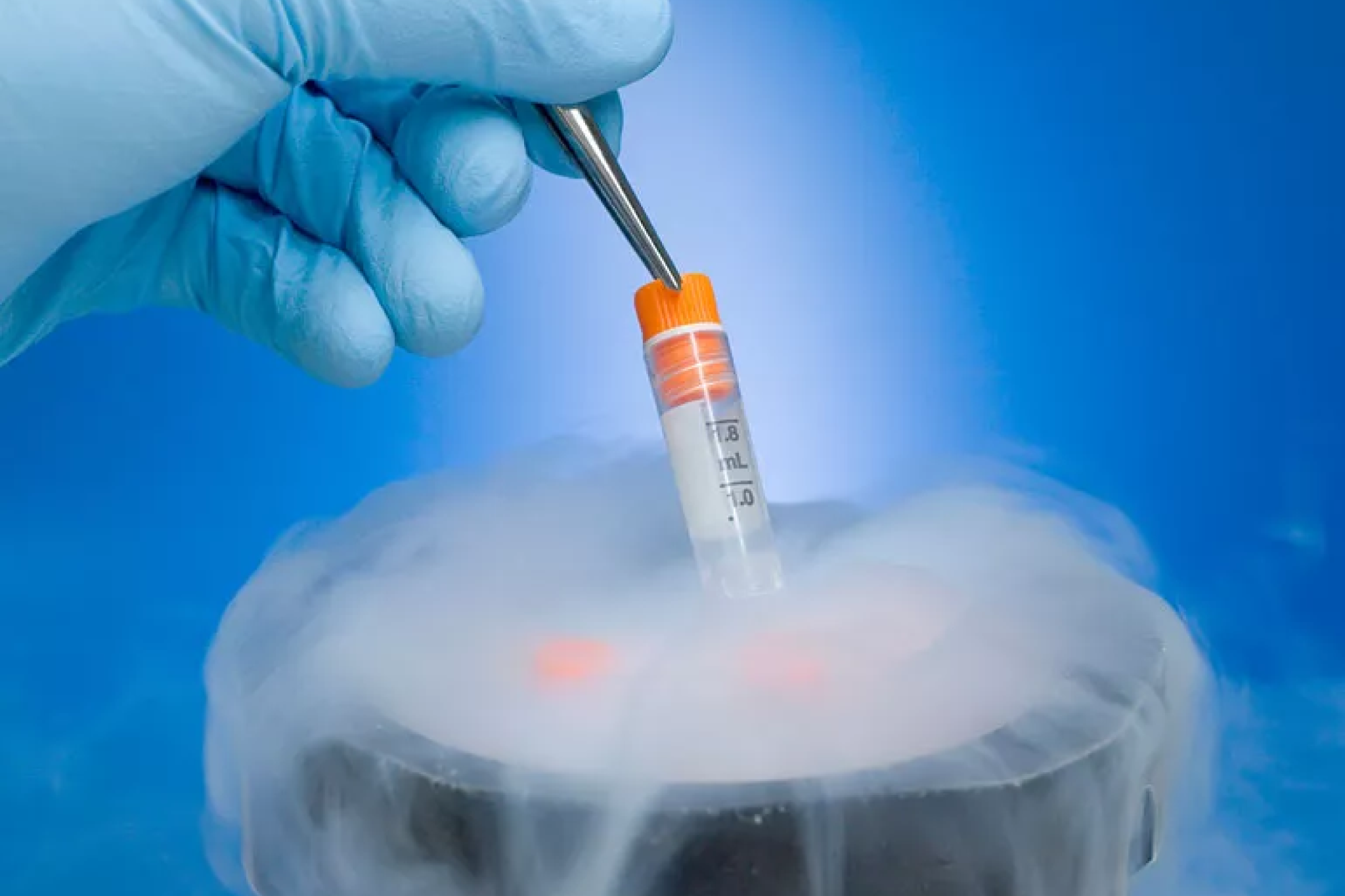
Egg freezing, a way to preserve your fertility.
As we get older, the number of eggs in our ovaries The number of eggs naturally decreases, and the quality of these eggs can also deteriorate. This happens because, unlike men who produce sperm throughout their lives, we women are born with all the eggs we will ever have. And over the years, these eggs are used up and their quality decreases.
Nowadays, many of us wish to postpone motherhood to focus on our careers, studies, travel, save money, or find the right partner. However, when we finally decide it's time to get pregnant, we may discover that the quantity and quality of our eggs are no longer ideal.
This is where egg freezing comes in as an important strategy for fertility preservation and family planning. Freezing your eggs today can reduce the risks associated with delaying motherhood.
What is the best age to freeze eggs?
One important point to consider is age. Is there an ideal age for egg freezing? Ideally, the procedure should be done as soon as possible, preferably before the age of 35. Why? Because the eggs of young women are generally more numerous and of better quality.
With younger patients, we often obtain a good number of eggs in a single freezing cycle, which offers a higher chance of successful pregnancy in the future. If freezing is done later, it may be necessary to perform more cycles to obtain an adequate number of eggs, which can make the process longer and more expensive.
Although there is no specific age limit for freezing eggs, it is essential to align expectations with your doctor to understand if, in your case, it makes sense to evaluate the cost-benefit of the procedure.
Medical indications for egg freezing.
In addition to personal and social reasons, such as the desire to postpone motherhood, there are medical indications to consider egg freezing. For example:
Cancer treatments: Patients diagnosed with cancer who need to undergo chemotherapy or radiation therapy may have their fertility compromised, as these treatments are toxic to the ovaries. In these cases, egg freezing before starting treatment is a way to preserve the chance of having children after recovery.
Ovarian surgeries: Women who need to undergo surgery involving the ovaries, such as those with endometriosis or ovarian lesions, may choose to freeze their eggs before the procedure. This is because these surgeries can reduce the number of eggs available, affecting future fertility.
Egg or embryo freezing: which is the best option?
When we think about preserving fertility and postponing motherhood, the question arises: is it better to freeze eggs or embryos?
The answer largely depends on the patient's context. Egg freezing is a safe technique that gives women more freedom, since the eggs belong to them and, if they decide not to use them, they can choose to be discarded or donated, depending on their age at the time of freezing.
Embryo freezing, on the other hand, involves a "partnership," as it requires the woman's egg and a partner's sperm. If this partnership breaks down, the embryo can only be used to attempt pregnancy if both partners agree. Therefore, if there is no partner or the partnership is not stable at the time of reproductive planning, egg freezing may be the best choice.
The egg freezing process
Many women wonder how the egg freezing process works. The procedure involves some important steps:
Ovarian stimulation: The patient takes medication to stimulate the ovaries to produce multiple eggs. This process is monitored through ultrasounds and blood tests.
Egg retrieval: Once the eggs are mature, they are collected through a minimally invasive procedure performed under light sedation.
Freezing: The collected eggs are then frozen using a technique called vitrification, which is an ultra-rapid freezing process that prevents the formation of ice crystals, thus better preserving the quality of the eggs.
Egg freezing is a personal decision and should be discussed in detail with your doctor to assess the best strategy for each case. This technique offers a valuable opportunity for those who wish to postpone motherhood without giving up the chance to have biological children in the future.
If you are considering egg freezing or have more questions about the procedure, schedule a consultation. I am here to help you understand your options and make the best decision for your family planning journey.