

What is the corpus callosum?
The corpus callosum is a brain structure responsible for connecting the two cerebral hemispheres: the right and the left. This connection allows for the exchange of information between the two sides of the brain and participates in various neurological functions.
During fetal development, the corpus callosum begins to form around the second trimester of pregnancy, following a gradual and organized process.
What does agenesis of the corpus callosum mean?
Agenesis of the corpus callosum occurs when this structure does not form properly during fetal brain development.
It can be classified as:
- Complete agenesis of the corpus callosum: when the structure is totally absent;
- Partial agenesis of the corpus callosum: when there is incomplete formation.
It is important to highlight that agenesis of the corpus callosum is not a single, homogeneous condition. It is part of a broad spectrum, with quite varied presentations and progressions.
How is agenesis of the corpus callosum identified during pregnancy?
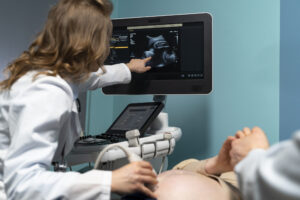
In most cases, suspicion arises during the morphological ultrasound, especially in the second-trimester assessments.
The specialist in fetal medicine assesses indirect signs in the brain, such as:
- Changes in ventricular anatomy;
- absence of expected structures;
- modifications in the normal pattern of the fetal brain.
In some cases, additional tests may be indicated for a more detailed evaluation, always with the aim of better understanding the context of that specific pregnancy.
Is agenesis of the corpus callosum always serious?
This is one of the most common and most important questions.
The answer is: not necessarily.
Agenesis of the corpus callosum presents a very wide spectrum of evolution. There are situations in which it is associated with other neurological or genetic alterations, but there are also cases in which it appears in isolation, without other associated malformations.
In isolated cases, especially, the outcome can be more favorable than many people imagine.
Therefore, avoiding hasty conclusions is crucial.
What is the role of fetal medicine in this diagnosis?
In fetal medicine, the goal of diagnosis is not to anticipate concerns, but to anticipate care.
Given the suspicion or confirmation of agenesis of the corpus callosum, the specialist's role is:
- to confirm the diagnosis with the greatest possible accuracy;
- investigate whether the condition is isolated or associated with other alterations;
- To guide the family with clear and realistic information;
- plan for appropriate prenatal care;
- Prepare for post-birth assistance, when needed.
Each of these steps is carried out individually, respecting the uniqueness of each case.
What this diagnosis alone does NOT define
One essential point that needs to be emphasized:
Agenesis of the corpus callosum, in isolation, does not define how the child's development will be.
It does not, by itself, determine:
- intellectual potential;
- quality of life;
- future functional capacity.
Follow-up care after birth, appropriate stimulation, and the child's overall context are fundamental factors for development.
Why is identifying agenesis of the corpus callosum during pregnancy important?
Prenatal diagnosis allows for:
- To guide parents with more clarity and less uncertainty;
- to organize appropriate neonatal follow-up;
- to avoid surprises at the time of birth;
- to promote safer and more planned care.
In fetal medicine, well-conducted information leads to preparedness, and preparedness leads to safety.
The importance of a careful and humanized approach.
Receiving a neurological diagnosis during pregnancy is never simple. Therefore, in addition to technique and scientific evidence, it is essential that this process be conducted with listening, empathy, and responsibility.
Every pregnancy is unique. Every family experiences this moment differently. And every diagnosis needs to be carefully contextualized.
Agenesis of the corpus callosum is a complex condition, but one that needs to be understood without determinism or alarmism.
With a specialized fetal medicine assessment, proper monitoring, and clear information, it's possible to navigate this diagnosis with greater peace of mind and preparedness.
If you received this information during pregnancy or have questions about your baby's neurological development, always talk to your obstetrician and, when indicated, to a specialist in fetal medicine.
Caring also means informing responsibly.